Sunday, July 26, 2015

17th Sunday of Ordinary Time

2 Kings 4:42-44 + Psalm 145:10-11, 15-18 + Ephesians 4:1-6 + John 6:1-15

Delivered at Holy Spirit Catholic Church in Mustang, Oklahoma


During the next five Sundays we take a break from Mark’s Gospel and plunge into the riches of the 6th Chapter of John’s Gospel. In the 6th Chapter of John, Jesus gives his “Bread of Life” discourse, which is packed with Eucharistic themes.

The Mass, a term which Catholics use for the celebration of the Eucharist, is the “source and summit” of our life of faith. The graces received at Mass nourish our journey of faith. From this summit, we can look back over the past week to see where God was present and look ahead into a future full of hope because God has been with us.

At the mountaintop of the Mass, we encounter the Risen Jesus in a powerful way. He takes the gift of our lives and blesses our lives by filling them with his Risen Life; he breaks open our lives by drawing us into the saving mystery of his dying & rising, and then he gives us our lives back transformed by His Spirit. United to the Risen Jesus through the celebration of the Mass, we discover we have more than enough to sustain our life.

As we explore the rich Eucharistic imagery in the 6th Chapter of John, I will review some essential fundamentals of worship. While reviewing these essential fundamentals, I also will be addressing some practical matters of proper behavior at Mass.

It will be impossible for me to cover in 5 talks over these 5 Sundays everything that is involved in the celebration of the Eucharist. I could give a talk every Sunday for the rest of this year and still not plumb the depths of this wondrous mystery we call the Mass. For these 5 Sundays I simply want to review the essentials of the Mass and give direction and advice on practical matters.
“Why do I have to go to Mass?”  “Why can’t I pray to God in the privacy of my room?” Has your teenager ever asked you these questions? Or maybe when you were a teen, you asked these questions of your parents in an attempt to justify your sleeping in on Sunday morning.

The simple answer to the question why we need to go to Mass is this: God made us to worship God with others.

Essential to our make-up, essential to our being human, is this basic need to worship God with others. Private prayer helps us grow in relationship with the Lord Jesus, but public, communal worship is even more important. One 12th century sage put it this way: “Public worship is seventeen times better than private worship.”

Throughout the history of humankind, the preoccupation with self has turned men and women away from God. Selfishness drives us to make ourselves the center of everything, when the only way to true peace and joy is when God is at the center of our lives. The celebration of the Mass constantly confronts us with the call to sacrifice our preoccupation with self, to die to self-centeredness and to rise up with Christ to an abundant life with Him and in service to others. The communal worship which is the heartbeat of the Mass is threatened like never before in an age where “selfies” and overt attention seeking are the practice of the day.

Communal worship counters the self-serving cultural mantra of “me, my, and mine” with “thee, thy, and thine”—directing our focus outward to God. The living Christ who we encounter in a very definite and real way in the Mass draws us out of the death of our self-centeredness to new life, from “give me, give me, give me” to total self-giving with him and through him. 

Because our worship at Mass is by its very nature corporate, it resists any narrowing of the spiritual life to a private relationship between the solitary soul and God. The Mass places God in the center and us in community. Entering fully into the celebration of the Eucharist reminds us life is about much more than “me”—it’s about “we” who are one in Christ, who together direct our lives toward the Source of Life, God Himself. Here, in the work of communal worship, we redirect our focus, away from deadly self-absorption toward the living Christ present sacramentally and in others.

The boy in today’s Gospel reveals the attitude of generosity which is vitally necessary for our communal worship at Mass. He is not self-centered, thinking only of himself, but focused on how he can be of help to the larger group, thus he brings food to Jesus. The boy could have hoarded his lunch, feasted on some fish sandwiches. Instead, he brings what he has to Jesus, placing the gift of himself in Jesus’ hands. The miracle of life-giving worship happens when we all have this kind of attitude.

What we do at Mass, we do together. We pray together, not some of us faster or some of us slower, but together. Even the personal prayers we offer in silence after everyone has received Holy Communion, we offer together, in silence with others. We open up our hymnals and sing together. Together we stand, together we sit, together we kneel. For those who are physically capable, all these bodily movements are done together. We don’t come here and do whatever we want, standing while everyone else is kneeling or kneeling while everyone else is standing.

When we worship with others at the Mass, we die with Christ to a preoccupation with self, and rise with him to new life as a member of His body, the Church. United by the Spirit of Christ, we are able to give God the Father fitting praise and thanksgiving. Together we experience the wonders of God’s providential love, together we experience how the hand of the Lord feeds us and provides for all our needs.

The introductory rites of the Mass, also called the gathering rites, help us to turn away from our preoccupation with self and to turn toward God and others. We sacrifice our individualism for a short while in order to be part of something much bigger than our own small self. The first of the four parts of the Mass, the Introductory Rites are sometimes referred to as the gathering rites, and there are two types of gathering taking place: The gathering of individuals into a community and the gathering within ourselves, which helps us focus on God and others. This 2nd kind of gathering—the preparing of our heart and mind and soul for worship—requires both remote preparation and proximate preparation.
The remote preparation happens before we enter the church doors. The church requires us to fast from food and drink for one hour before receiving the Body and Blood of the Lord in Holy Communion. This “fast” prepares our body to enter more fully into worship, this kind of sacrifice helps us die a little bit to self. So, we do not bring candy or food into the church, nor chew gum before or during Mass.

Arriving early helps prepare our mind and heart. When we are rushing into church at the very last minute, or when we are late, our thoughts are jumbled and our heart is racing—it’s hard to be focused on the important work of worship we are about to do.

Another good practice for remote preparation for worship is to leave our cell phones in our cars. If we cannot “disconnect” for one hour from our electronic gadgets, then we have a serious addiction which needs healing. In order to give our total focus to worshiping God with our sisters and brothers in Christ, we can’t have our cell phone in our pocket or purse, buzzing or ringing throughout the Mass. To be present to Christ who comes to us at Mass, to connect with Him
who is the Source of Everlasting Life, we have to disconnect from our phones. An exception would be a doctor on call who needs to wear a pager or phone in order to be summoned away in case of an emergency.

Upon entering the church we do several things that help us prepare for worship.
1. Bless ourselves with Holy Water
2. Genuflect to the presence of Christ in the tabernacle
3. Silent prayer in the pew
4. Read over the readings in the missalette
5. Locate the opening song in the hymnal
6. Be hospitable by saying a few words of welcome to someone who comes and     sits by you. But ongoing conversations need to take place outside the church     proper.
7. If someone needs to be seated in your pew, be hospitable and move to             toward the center. Liturgical ministers may need to stay seated at the end of     the pew in order to exit promptly to proclaim the Scriptures or help with             Communion, but others need to be considerate when people come to sit in         the pew  with you.

The following occur during the Introductory Rites (Gathering Rites):
          Opening Song—singing draws us out of ourselves and unites us to others.
          Sign of the Cross & Greeting—life in the Trinity, marked by saving cross.
          Penitential Act—We have an ongoing need to seek forgiveness for our                                         sins, for we are sinners in need of God’s mercy.
          Gloria—We rejoice in God’s saving mercy. The refrain of the Gloria is the                                   song of the angels at Jesus’ birth—God has been born                                       among us, like us in all things but sin, to save us from                                     sin. How can we not sing “Glory to God!”
         Opening Prayer (Collect)

The gathering rites transform us from disparate individuals into a community of faith joined in worship. They prepare us to hear the word of God which will be proclaimed and to worthily celebrate the Eucharist.

The introductory rites, as the first part of the Mass, move us away from self-centeredness toward others and unite us as one body in Christ. These rites pull us out of self-absorption toward the Other, the Living Christ who is the Bread of Life
Fr. Joseph A. Jacobi

Sunday, July 19, 2015

16th Sunday of Ordinary Time


Link to today's readings

Jeremiah 23:1-6 + Psalm 23: 1-6 +  Ephesians 2: 13-18 + Mark 6:30 - 34

Click here to listen to this homily
Delivered with Holy Spirit Catholic Church in Mustang, Oklahoma


It does not seem fair. Jesus and his apostles cross over to the other side of the lake to escape the crowds, but the people’s feet are faster than their oars. Jesus and the apostles seek a little peace and quiet, time to rest and recuperate, but when they disembark a vast crowd awaits them.

Instead of sending all these people away, Jesus, the Good Shepherd, teaches them about the mysteries of the Kingdom of God, and then later he will feed them by the miracle of the multiplication of loaves. Jesus finds energy in compassion, true rest by giving himself to those who hunger for his love.

The English word, “pity,” used in today’s Gospel, does not accurately convey what moves Jesus’ heart when he sees this vast crowd who have raced around the lake to find him. The literary meaning of the original Greek text is better captured by the word, “compassion.”

In the Old Testament, the Hebrew word “racham” is the root word for the English word “compassion,” and brings in an even deeper level of meaning. “Racham” refers to a woman’s womb. A mother has a very unique relationship with the child of her womb of love and care,  that does not end even when that child grows into an adult. The Biblical authors see a correlation here in the way God cares for those whom God has given the breath of life. In Psalm 103, the Psalmist uses this same term, the root of “racham,” to describe God’s love in the person of a child’s father: “As a father has compassion on his children, so the Lord does on those who revere him.”

By raising children and making daily sacrifices of love, a parent know what compassion is, as a parent suffers with their child  through difficult, painful moments, while always remaining their mother or their father, regardless of the child’s age.

Thus, for Jesus to have “compassion” on the crowd gives us a clue as to what energizes him and is meant to energize us. The word “pity” conveys separateness, a looking down upon the other, a feeling sorry for the other—to say to another, “you poor thing.” Compassion is something totally different, for compassion flows from a felt “sameness,” a “oneness” with the other in their suffering and pain.

When we stand over someone with pity, it takes a lot of energy to leave our “world” and enter their world. We cannot find rest in such a relationship, but rather find it to be hard work. Compassion, however, is different. When a parent sees their child suffering, they act immediately with compassion---they find a source of strength and love they did not know was there. Parents who stay by their children in the hospital for days on end do so out of the deep well of compassion, as do parents who give of themselves daily to their children in the normal sacrifices of love.

There are still those times when parents can feel worn out by the demands that loving their children places upon them, but almost all parents would say that when they have a child, they discover a vast reservoir of love within them that was not there before. They are energized to be compassionate toward their child, to endure with their child whatever challenge may come. They do not feel separate from their child, but rather one with them, and this makes all the difference when it comes to loving compassionately.

Jesus comes to reveal his heavenly Father and ours, the Parent of all Creation. Jesus is the concrete manifestation in the flesh of the Heavenly Father’s love for the world. He loves others through the eyes of compassion and the deeds of compassion. Jesus does not separate himself from the suffering of the world, but reaches out to touch the leper and the mute, to embrace those paralyzed physically and those whose hearts are frozen by hurt. He is Compassion enfleshed, and in his flesh he manifests the compassion of God toward every creature that God has created.

The culture in which we live has become less and less compassionate, because it emphasizes “difference” over “sameness.” We are taught from a young age to discover and develop what sets us apart from others, to focus on what makes us special, to differentiate ourselves from the masses out there. We are told this is the way to be noticed, to get the best job, to be successful. But it is not the way of compassion, it is not the way of Jesus, it is not the way to true rest. Now this does not mean that we should not develop our own unique talents and use them for the glory of God, but when we begin to believe we are different from others, better than others, entitled to special treatment, then we have lost our way. And this way eventually drains us of life, because it takes too much energy to be who we are not, instead of resting in our unity with all the human family and living with compassion toward ourselves and others.

Living a life of compassion opens our eyes to see how we are all connected. Bud Welch discovered this truth when he went to visit the father of Timothy McVeigh. Bud’s beloved daughter, Julie, died at the hands of Timothy McVeigh in the 1995 bombing of the Murrah Building, and Bud, like other relatives of victims, wanted McVeigh to suffer and die. But Bud had a divine inspiration to visit the father of this mass murderer, and after doing so, Bud came to the realization that Mr. McVeigh was just like Bud---both of them fathers who loved their children no matter what. In this oneness with another father, Bud suddenly realized that to kill Timothy McVeigh would result in the breaking of another father’s heart. Bud Welch saw clearly how this was not the answer to his own pain and would only create more pain. Thus, Bud Welch chose the way of Compassion by becoming an advocate for life and speaking against the death penalty.

This mission of Jesus, which he confers upon the Apostles, and upon all of us who are filled with His Spirit, is to bring all Creation back into union with the Creator and Father of all. All that Jesus does, and all that we who follow him are meant to do, is to remind others that there is one Source of Life, the Father of all, and when we rest in the Father’s love, we discover the energy to love others as our brothers and sisters. As Martin Luther King puts it, “We must live together as brothers and sisters or perish together as fools.” The Father and Creator of all breathes into each of us the breath of life, and sustains us each day with a Father’s care, providing us with our daily bread. Because we have the same Father, we are sisters and brothers to one another, no matter how different we may look like on the outside. Beneath our skin we all have the same color of blood running through our veins and we are all shaped by the same creative hand. We come from One Source, and we all share a common home. Pope Francis’ encyclical, “Laudato Si”, makes this point clear---everything is connected. We are connected to one another, and we share an unbreakable connection with the Earth which God has given us, not to dominate and to plunder for our pleasure, but to use wisely and well for the benefit of all earth’s creatures. We share a common home, and we must care for it as we care for the home of our own particular families.

Some would say that to love others in such a way, to care for our common home in such a way, is too difficult, too demanding, too challenging. But for we who are empowered by the Spirit of the Risen Christ, who by the power of his resurrection initiated a new Creation, we know that living a life of Compassion is possible.

Here we enter into Communion with one another and with Compassion Himself. Here we are joined to Christ and through his Sacred Heart enter more fully into the embrace of the Father. In this Holy Sacrament, we are filled with divine energy to love as Christ loves. In Him and with Him and through Him we find true rest.


Fr. Joseph A. Jacobi

Sunday, July 5, 2015

14th Sunday in Ordinary Time


Link to today's readings
Ezekiel 2:2-5 + Psalm 123:1-4 + 2 Corinthians 12:7-10 + Mark 6:1-6 

Click here to listen to today's homily
Delivered at Holy Spirit Catholic Church in Mustang, Oklahoma


For three successive Sundays we have listened to Gospel accounts concerning faith. For three consecutive Sundays the evangelist Mark has placed before us encounters between Jesus and those who place their faith in him, and those who do not.


Two Sundays ago as the disciples in the swamped boat were drowning in fear, Jesus calmed the raging waters of the sea and the storm of their fear, challenging them: “Do you not yet have faith?” Last Sunday we encountered with Jesus two people of great faith, a woman who knew she would be healed of her bleeding if she could just touch Jesus’ cloak, and Jairus, who begs Jesus to heal his dying daughter. Today we come face to face with those who think they know Jesus best but who do not really know him at all---the people of his hometown in Nazareth. Jesus, amazed by their lack of faith, is unable to perform any mighty deed in Nazareth.


For three Sundays in a row in Mark’s Gospel we have been challenged to ponder the meaning of faith. What is faith? Why do some people lack faith in the Lord and others have great faith?


God gives God’s very self to us in Christ Jesus, and faith is our response to that gift. God gives God’s self to us in baptism as we are filled with the life of the Lord Jesus, claimed by the Father as His beloved son or daughter, and through the gift of the Spirit, become a new creation. God also gives God’s self to us in Holy Communion, as Christ Jesus pours his Risen life into us. Every day Jesus is walking by our side, engaging us in one way or another.


Faith is our response to this ongoing self-gift of the Lord, who is constantly giving himself away to us in love. Thus, faith is all about relationship---a growing relationship with the Lord Jesus, an ongoing response to Jesus’ invitation to come and see where he lives.


The people who lived with Jesus in Nazareth think they know Jesus and thus resent his newfound power and popularity.  “Who does he think he is?” The problem with these hometown folks is they stopped growing in their relationship with Jesus. They knew him as a kid who had grown up in their midst to become a carpenter. But that is when they stopped knowing him. In fact, pride prevented them from acknowledging there was a lot they did not know or understand about Jesus, that he was a constant surprise to them.


These people are not simply faithless, they are arrogant, proud, and very full of themselves. They are obstinate of heart. So sure of their opinion, and so confident that they know everything, the gift they might have been given in Jesus is refused. Consequently, they have no share in the signs that point to God’s presence among them—Jesus performs no mighty deeds in their midst.


Blinded by their certitude they cannot see who stands before them in the synagogue. Deaf to everything but the sound of their own voices, they cannot hear the good news being offered and proclaimed to them. Instead of engaging in conversation with the one who calls for their conversion, they talk to themselves:  “Where did this man get all this?” Notice the people of Nazareth are so sure of themselves and their worldview that they dehumanize Jesus by not even calling him by name.


The way faith flourishes is by openness to the Lord Jesus, especially when his words and his presence are challenging. But the people of Nazareth are not open to anything new, to anyone who goes beyond their narrow-minded, self-protecting expectations. They reject the whole idea that someone can change, grow, and become an instrument
of God’s mercy and love. By doing so, they cannot change---they do not grow—and God can do nothing with them.


As Bernard Lonergan says, “faith is knowledge born of religious love,” or in other words, a knowing that comes through loving. Loved by the Lord Jesus and daily responding to his invitation to come and see where he lives (living a life of faith), we learn there is more to know about him. Like any important relationship in our life, our relationship with the Lord Jesus is ongoing, developing, growing, and it has its ups and downs. What counts is a daily attempt on our part to respond to the love of the Lord. Faith is married to humility, as we admit we do not know the Lord Jesus as well as we ought, that he has much more to reveal to us about his person. What counts in our relationship with the Lord, which shows itself in our relationship to others and the world, is our openness and our desire to grow.


For conversion and growth in faith must be a continual way of life. At no point in our lives may we entertain the idea that we know everything, and a refusal to listen and explore ideas contrary to our own is a sure sign that pride is at work, and that is a deadly sin when left unchallenged. Worse than the tragedy of indifference is the haughty and smug attitude of a closed heart and made up mind which judges others and their ideas with presumptions and assumptions coming from within rather than from without.


Faith flourishes where there is an open heart and open mind. People who stop learning and cease to wonder and study about faith and revelation will not be able to see God’s mighty deeds, even if they are happening all around them. The Gospel and the faith it nourishes must be fed by wonder and awe, curiosity and a desire for life, which always means growth and change.


Cardinal Avery Dulles describes faith as “the radical conviction that we are surrounded and sustained by God’s love.” Since this is the foundational truth of our lives, that at every moment, with every breath, God’s love surrounds and sustains us, we have nothing to fear.


Not the storms of nature nor of life. Not chronic illness nor the death of a loved one. Not even the challenge of change itself.


Fr. Joseph A. Jacobi

Sunday, June 7, 2015

Most Holy Body and Blood of the Lord—Corpus Christi

Link to today's readings
Exodus 24:3-8 + Psalm 116:12-18 + Hebrews 9:11-15 + Mark 14:12-16, 22-26


Click here to listen to today's homily

Holy Spirit Catholic Church in Mustang, Oklahoma


During the Easter Season, which we concluded 2 weeks ago on Pentecost Sunday, each Mass began with the Sprinkling Rite with the holy water. The Sprinkling Rite is a very concrete way of remembering our baptism and rejoicing in the new life given to us by the Risen Lord.

Moses also uses a Sprinkling Rite to seal the covenant between God and the people of Israel—sprinkling the people with blood. Now you would recoil in horror if I started walking round the Church sprinkling everyone with blood, but such an action might wake us up to the gift given. For the central mystery of baptism is the saving death of the Lord, who shed his blood, who gave his life, that we might live. In the waters of baptism, we are joined to the dying of Christ in order to rise with him to new life as an adopted child of God. We literally become a new creation, washed clean in the blood of Christ.

Understanding baptism better helps us pierce the mystery of the Eucharist. The blood of Christ saves us. The saving death of the Lord Jesus is the font of every Eucharistic celebration. We taste the saving power of our baptism as we drink from the cup at the Eucharist, for the blood of Christ cleanses us from our sins. As we drink his blood which he poured out for us, we are washed clean, renewed, recreated.

On the cross, the Lord Jesus transforms the curse of suffering into a blessing leading to glory. The Lord transforms the curse of death by dying in order that we might live. The cup of Jesus, filled with his life, poured out for us and for all people, and our cup, filled with our life, have become one cup. What the cup of salvation holds is the life of Christ and our life, blended into one life.

Many people feel cursed—cursed by God with illnesses, losses, handicaps, and misfortunes. They believe their cup does not carry any blessings at all. But Jesus took upon himself the suffering of the entire world and lifted it up on the cross, not as a curse, but as a blessing. Jesus lifts up the cup of blessings—it is the cup of the new and everlasting covenant, the cup that unites us with God and with one another in a community of love.

Jesus died for us that we may live. He poured out his blood for us that we might have new life. He gave himself away for us so that we can live in community. He became for us food and drink so that we can be fed for everlasting life. So our suffering can no longer be viewed as divine punishment, Jesus, by his suffering love, transforms all suffering into a way to new life. 

The weekly celebration of the Eucharist, of the Body and Blood of the Lord, makes us more conscious that what we live every day is united to Jesus’ dying and rising. The cup of our sorrows and joys is an integral part of the great mystery of Jesus’ death and resurrection. We drink from the cup of Jesus’ saving love and realize that his love renews us, washes us clean. “The Blood of Christ.”   “Amen.” 

Sharing in the blood of Christ calls us into the same kind of generous self-giving, the same kind of loving. The death asked of us by this kind of loving enables us to give and share more life. It is the kind of loving that parents reveal to us in the ordinary day-to-day sacrifices they make for their families.

The sacrifices of love that parents make for their children is what bridges the gaps of life and makes whole the lives of good people everywhere. Dying to selfishness, parents know the best gift they can give their children is the gift of self, by being attentive and available. This is the day-in and day-out hard work of love—there is nothing glamorous about this kind of Christ-like loving. For a father or mother who has worked hard all day to provide for their family it can be even harder work to be responsive to a child when they as a parent are tired and just want to be left alone. But parents who model their lives on Christ and his saving sacrifice know that it is not fame or wealth that makes a difference in the world of a child, but simply constant loving attention.

All of us who drink from the cup of salvation are called to pour out our lives in love others more generously and joyfully each day. The death asked of us by this kind of loving enables us to give and share more life.

What response can we possibly make for the glorious gift of the Lord’s life poured out for us in love? A life of gratitude. A continual offering of thanks. A life that IS EUCHARIST. Lifting our cup to life means taking all we have ever lived and bringing it to the present moment as a gift for others.

When we lift our cup to life, we must dare to say: “I am grateful for all that has happened to me and led me to this moment.” 

This gratitude which embraces all of our past is what makes our life a true gift for others. Why? Because this gratitude erases bitterness, resentments, regret, and revenge. Because this gratitude erases all jealousies and rivalries and makes us one with Christ in one another. Lifting up the cup of our life joined to Christ transforms our past into a fruitful gift for the future, and makes our life, all of it, into a life that gives life.

Fr. Joseph A. Jacobi

Sunday, May 31, 2015

Solemnity of the Most Holy Trinity

Link to today's readings
Deut 4:32-34, 39-40 + Psalm 33:4-6,9,18-22 + Rom 8:14-17 + Matt 28: 16-20

Click here to listen to today's homily 
Delivered at Holy Spirit Catholic Church in Mustang, Oklahoma

When Christians think about the Trinity and how to understand the Trinity, many often think about St. Patrick’s example of a shamrock---three leaves in one plant. Though that image may have helped the pagans in Ireland grasp the nature of the Triune God, it does not go deep enough. Why? The image of a shamrock is impersonal. What Christians believe in are 3 persons united by the same divine substance. Father, Son, and Spirit in a communion of light and love, life given and received.

Thus, St. Augustine’s image of the Trinity as lover, beloved, and love plumbs more deeply the reality of God: the Father as the lover, the Son as the beloved Son, and the love flowing eternally between them as the ever-living, ever creative Spirit.

The real truth about who God is and what Divine Life is all about can only be discovered in relationship, a relationship of love. The Trinity is not a puzzling theological concept nor a complex philosophical discussion. It is a lived experience of our relationship with God. The first time you said, “Our Father” and truly meant it, you did so by the power of the Holy Spirit, says St. Paul today in his letter to the Romans. That Spirit enables us to understand that we are children of God. The Spirit draws us deeper into friendship with the Son of God who calls us “friends.” By that Spirit we are drawn into this intimacy with God and discover that God is not off in some infinite solitude, but rather that God is in communion with us, giving and receiving light and life.

Through the Incarnation of the Word made flesh, a relationship is established with us, God enters into our life and invites us to enter into God’s life through the Word, Jesus Christ.

The entire mission of Jesus Christ was to invite and teach us how to live in love, in unity and in peace. His life of service and reconciliation, healing and forgiveness is the love of God for us, gathering in the lost and those left behind. We are the ones he came to gather together. We are the ones he calls, “friends.” It is in relationship with Jesus, the Son of God, the 2nd Person of the Holy Trinity, that we discover what divine life is all about. It is through Jesus that we discover we are called to live in communion with each other and with God.

We are made in God’s image, every single one of us, and since God is a Community of Persons bound by love, so it is in our nature to be. We are made to be in relationship to each other, we are made for community, we are made for unity with one another and with God.

We are not created by God to be solely individuals. In our culture, we live with the danger of “individualism,” which is the prevalent American way of viewing the human person. Thus, the American way is to go it alone. The Way of Trinity—we need each other. In fact, we can only make it to heaven together. The American way tends toward an inward focus on “me,me,me” which is deadly. The Way of Trinity is to focus outward on “we, we, we.” The American way is to place too much faith in technology. The Way of the Trinity is to put our faith in the messiness of relating person to person, of saying to others by our lives, this is my body given up for you—I am here for you.

Though modern technology has made our lives much easier and has helped us to connect more quickly with loved ones, and even with strangers, there is also a dark side to technology. Many people spend more time relating to machines than to people. Many become totally absorbed in smart phones and tablets and computers, and are held captive by TV screens and movie screens. They find it difficult to tear themselves away, to turn toward the other, to turn toward God. The basic setting which for centuries deepened and enhanced human relationships—sharing a meal together—has lost its power because those eating pay more attention to their smart phones than to the people gathered around the table. The “ping” of a text or the “buzz” of an incoming call causes people who are meant to connect to each other while sharing in the basic act of nourishing their bodies to not even be bodily present to one another.

We believe in the Triune God, who is not an abstraction, but who is interested in us, who is present to us, who wants to engage us on a personal level, especially in the context of this sacred meal we call the Eucharist. We gather around this table to give our complete attention to God and to one another in worship and so be drawn deeper and deeper into communion with the Trinity.

This experience of being drawn into the very life of God begins for us at Baptism as the command Jesus has given is obeyed. Baptized in the name of the Father, and of the Son and of the Holy Spirit seals our adoption into the family of God. Every other sacrament draws us deeper into this divine life of grace, which makes our participation in all the sacraments so very important if God’s life is to be sustained in our own.

At baptism, we are claimed by the Father as one of his children, joined forever to the Son, and transformed by their life-giving Spirit. At baptism, we are adopted into the Trinity, into life with the Triune God.

So that throughout life, as we live out our baptism, we can come to know the Father who is always for us, the Son who is forever with us, and experience the sustaining presence of the Spirit within us.

WE ARE A FACTOR IN GOD’S LIFE. ENTRUSTED BY TRINITY TO DO GOD’S WORK, TO BRING OTHERS  INTO LIFE WITH THE TRINITY. EVEN THOUGH WE DOUBT, STILL ENTRUSTED WITH THIS WORK.

“What God does first and best and most is to trust people with their moment in history, to do what must be done for the sake of his whole community. “  (Walter Burghardt, SJ)


Fr. Joseph A. Jacobi


Sunday, April 26, 2015

Fourth Sunday of Easter

Link to today's readings
Acts 4: 8-12 + 1 John 3: 1-2 + John 10:  11-18

Click here to listen to this homily
Delivered at Holy Spirit Catholic Church in Mustang, Oklahoma

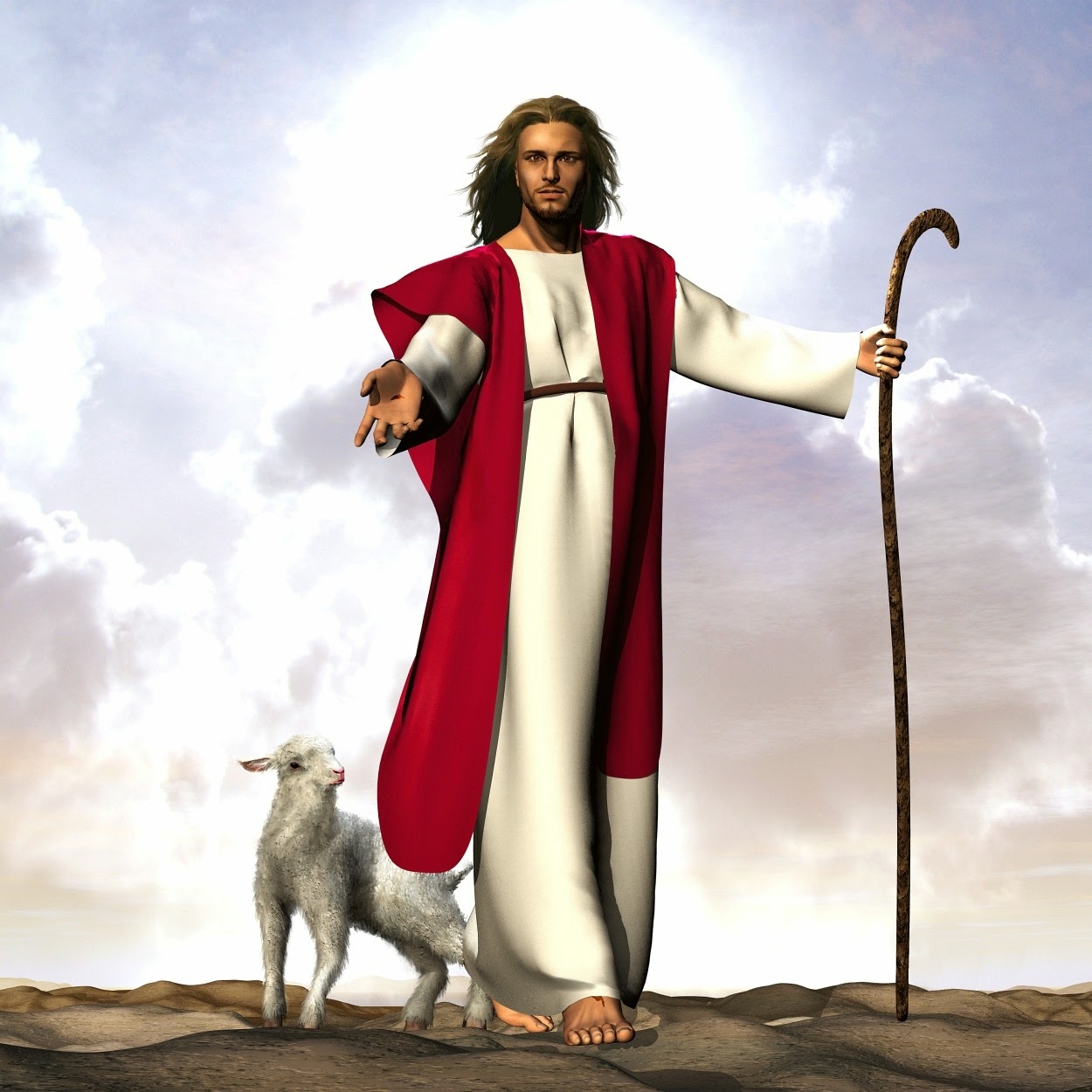
I do not know about you, but I have never met a shepherd. So, to better understand this image of Jesus as the “Good Shepherd”, I decided to do some research.

After all, shepherds play an important role throughout salvation history: One of Adam’s sons, Abel, is a shepherd; the most famous king of Israel, David, is a shepherd. When the Son of God is born in Bethlehem, the first ones to receive 
this great good news that a Savior is born—shepherds tending their flock.

In my research, I came up with the following job description for a shepherd.

Shepherds protect sheep from wolves and other wild animals. They seek out and find the lost sheep. Shepherds lead the sheep to green pastures and running water. In other words, they provide food and drink for the flock.
Finally, a shepherd lives with his sheep. He will not leave them, but will stay by their side in good and bad times, when the sun is shining and when it is raining, when it’s hot and when its bitterly cold. A shepherd even sings to his sheep to assure them of his presence with them, and to teach them to recognize his voice.

So, when Jesus says he is the Good Shepherd, then we know He will not leave us, his sheep. That he will be with us always, even to the end of the world. He will be with us through good times and bad times, by the gift of His Spirit  and in a unique and powerful way through the Eucharist.

As the Good Shepherd, the Risen Jesus becomes our food and drink. He feeds us with the great gift of His Body and Blood, giving himself to us to feed our hunger for God, to quench our thirst for the divine. As the Good Shepherd, Jesus seeks out and finds the lost sheep. He will not rest until he does so. Whenever we are lost in the darkness of doubt or despair, he finds us there, 
and becomes the light for our path. Whenever tears of sorrow or pain cloud our vision and we cannot find our way, he finds us and becomes the Way to joy and peace. He also lives forever, and pleads for us at the right hand of the Father. He prays for us! The Good Shepherd knows each of us by name and knows exactly what we need. How does the Good Shepherd protect us?  He dies so that his friends might live. Remember how he shields his first followers from suffering the same fate as he. In John’s Gospel, when the soldiers come in the dark of night to arrest him, he orders them to free his disciples. “If you are looking for me, let these men go.” Later that same night, as he is being brutally interrogated by Annas, the high priest, who wants to know about his disciples, he will not give them up. Finally, while dying on the cross, he gives his mother to his beloved disciple that she might be protected from harm and cared for.
“Woman, behold your son.” To his beloved disciple: “Behold your mother.”

As the Good Shepherd, Jesus destroys the big, bad wolf called “death” and restores life. The wood of the cross becomes his shepherd’s staff which he uses to fight off the devil, to protect us from the power of evil. As the Good Shepherd, Jesus lays down his life on the cross; he dies so we can follow him through the jaws of death into the fullness of resurrected life. He leads and we follow him to the always green pastures of the heavenly kingdom.

Five times in today’s Gospel passage, Jesus states he will “lay down his life.”
The Good Shepherd does not take away death, but transforms it by laying down his life and thus makes death a doorway into new life.  

At the center of every celebration of the Mass is this saving offering of Christ 
which we remember and by remembering make present. He freely chooses to lay down his life for us because he loves and desires to save us.

The Good Shepherd, Jesus the Christ, lives every day at our side, to protect and strengthen us, to lead us daily by the waters of peace, to free us from the danger of self-centeredness and other sins that drain the very life out of us. Jesus gives himself totally and completely to us out of love, holding nothing back, so we might have the strength to give ourselves away in love of others. Jesus lays down his life, so we might have the power, in Him, to lay down our lives in loving service of others.

So we might say to others by our lives poured out in love, “I will be there for you.” “In good times and bad times, in joy and in sorrow, I will be there.” To protect, to nourish, and to guide. To be a good shepherd….


Father Joseph A. Jacobi